
In production management, a task may take on different names depending on the depth of management. The most common starting point is the "Work Order." A work order typically includes the purpose of production, product name, quantity, as well as the required materials and processes.
The core purpose of a work order is to issue an "internal order" to every machine and operator in the factory. Whether on paper or in digital form, it creates a traceable, consolidated, and reviewable record for the entire production process.
In small family-run factories, the owner might simply announce, "We're making 50 tables today," and production begins. Without work orders, such a system creates a huge "black box effect," making it difficult to track which customer those 5o tables were made for, how much wood was used, and how many labor hours were spent.
With work orders in place, employees in the factory can use the work order number to record each step of the process and clearly understand the purpose of each production run (eg. fulfilling customer demand or replenishing safety stock). This makes everything more transparent and visible, reducing the likelihood of production happening "jut for the sake of production."
Additionally, when materials are issued from the warehouse based on a work order, it becomes possible to trace exactly which production run consumed which inventory items. By tracking due dates, start dates, and completion dates on the work order, factories can better plan and optimize production scheduling.
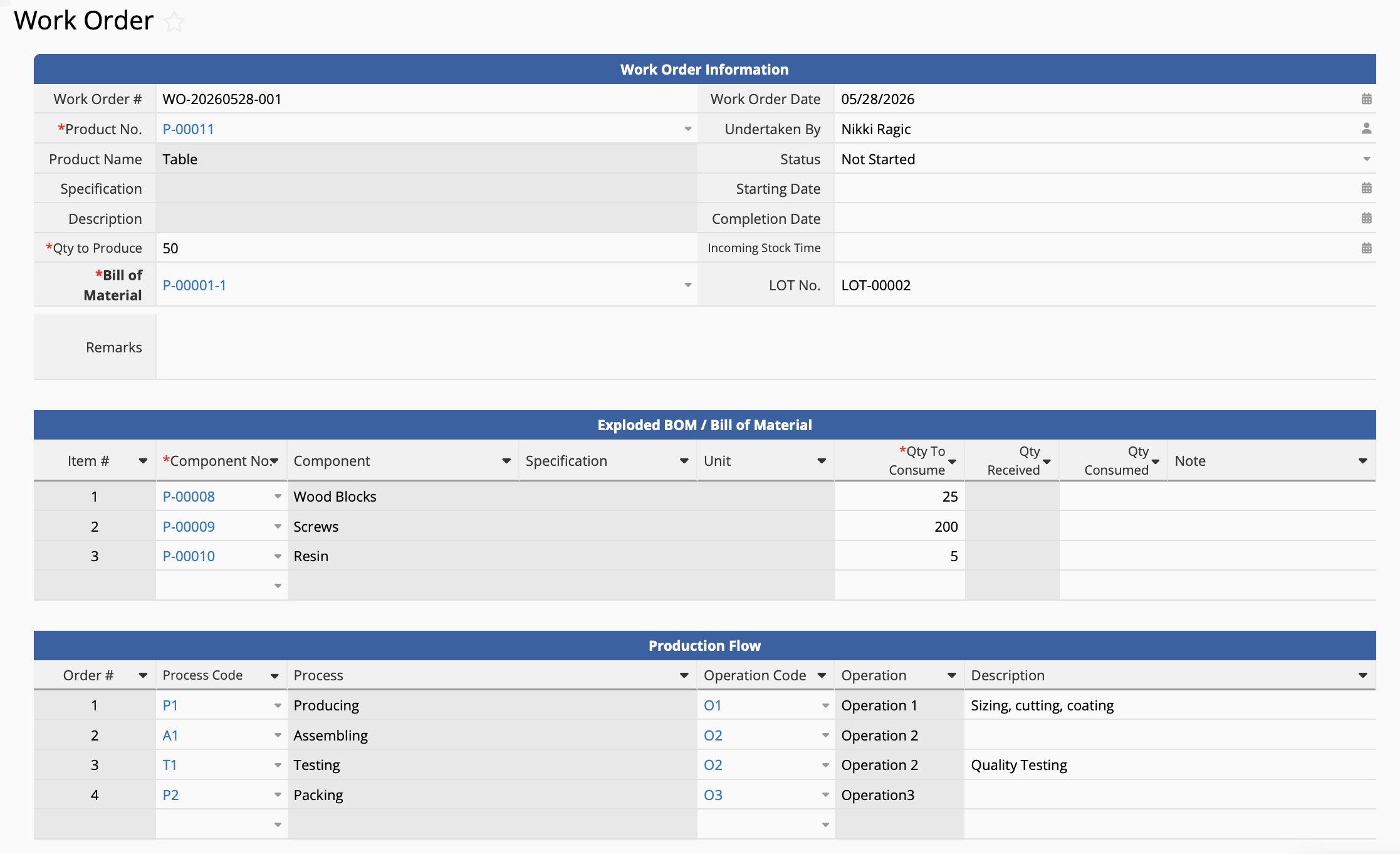
Although both "orders" and "work orders" involve agreements to deliver products, in reality, they do not always have a one-to-one relationship. For example, a customer may place an order for 100 bicycles, but to reduce mold-switching costs, the factory may combine it with another customer's order for 50 bicycles and issue a single production work order for 150 units, completing both orders in one production run.
Conversely, if a customer orders a highly complex, custom machinery, that single order may be broken down into three separate work orders managing the progress of different components such as the base, motor, and chassis individually. This is because these three components may be manufactured in parallel by different production teams at different times. Without managing them separately, managers would not be able to discern which stage current progress may be stuck in.
In production management, a task may take on different names depending on the depth of management. For example, in a more granular division of labor, a work order is simply a basic "order list" describing the requirements and instructing the production department to deliver specified items and quantities to the sales department:
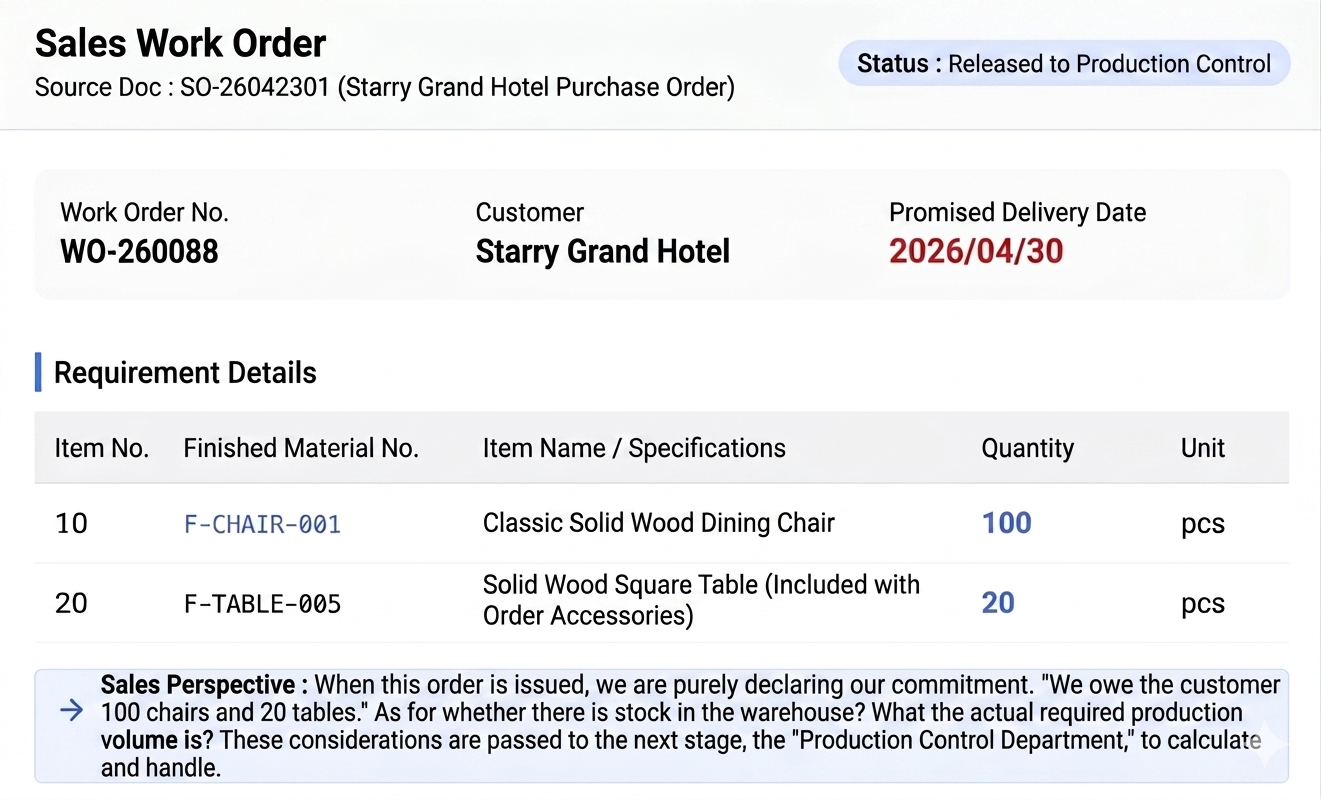
When the production planning department receives this work order, they may find that there are enough dining tables but not enough chairs. They would then issue a "production order" specifically for the chairs:
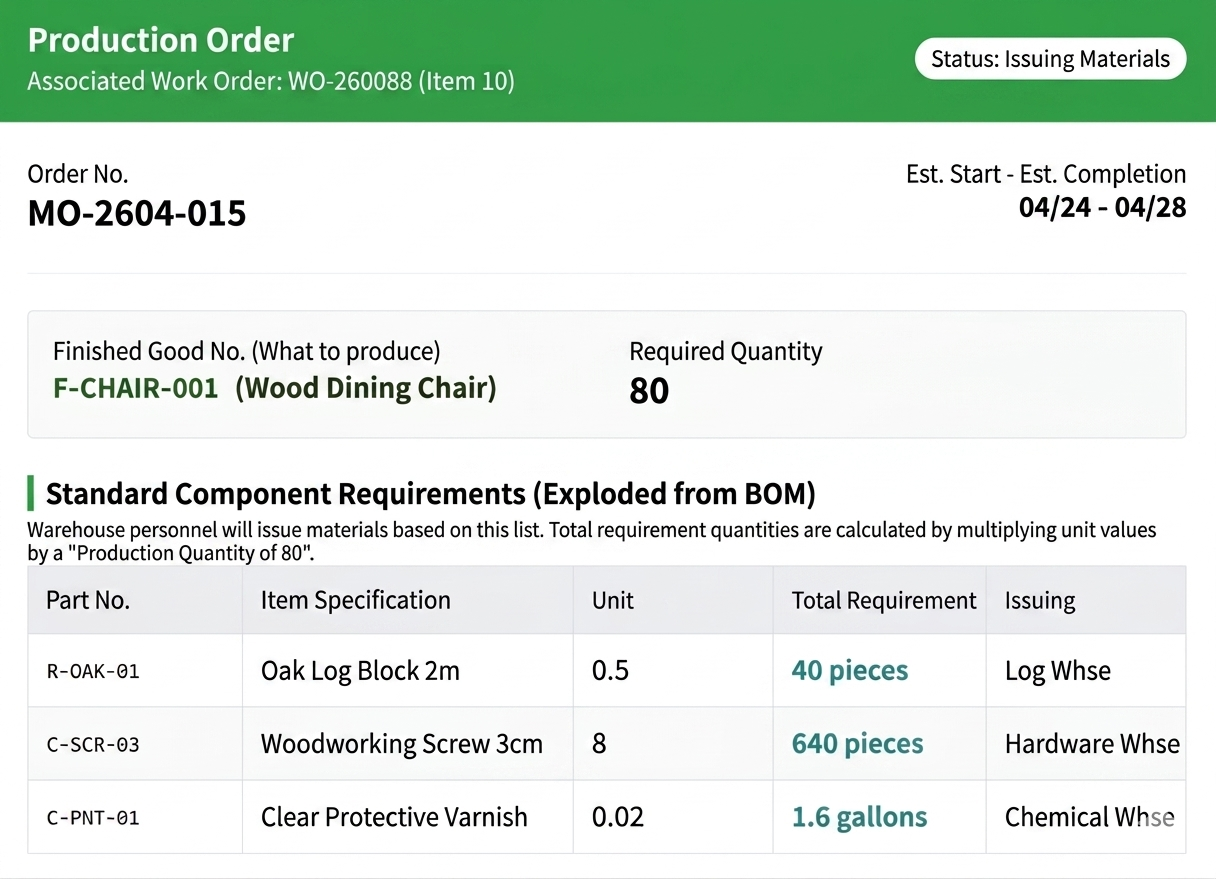
This is further broken down into instructions for each individual manufacturing step:
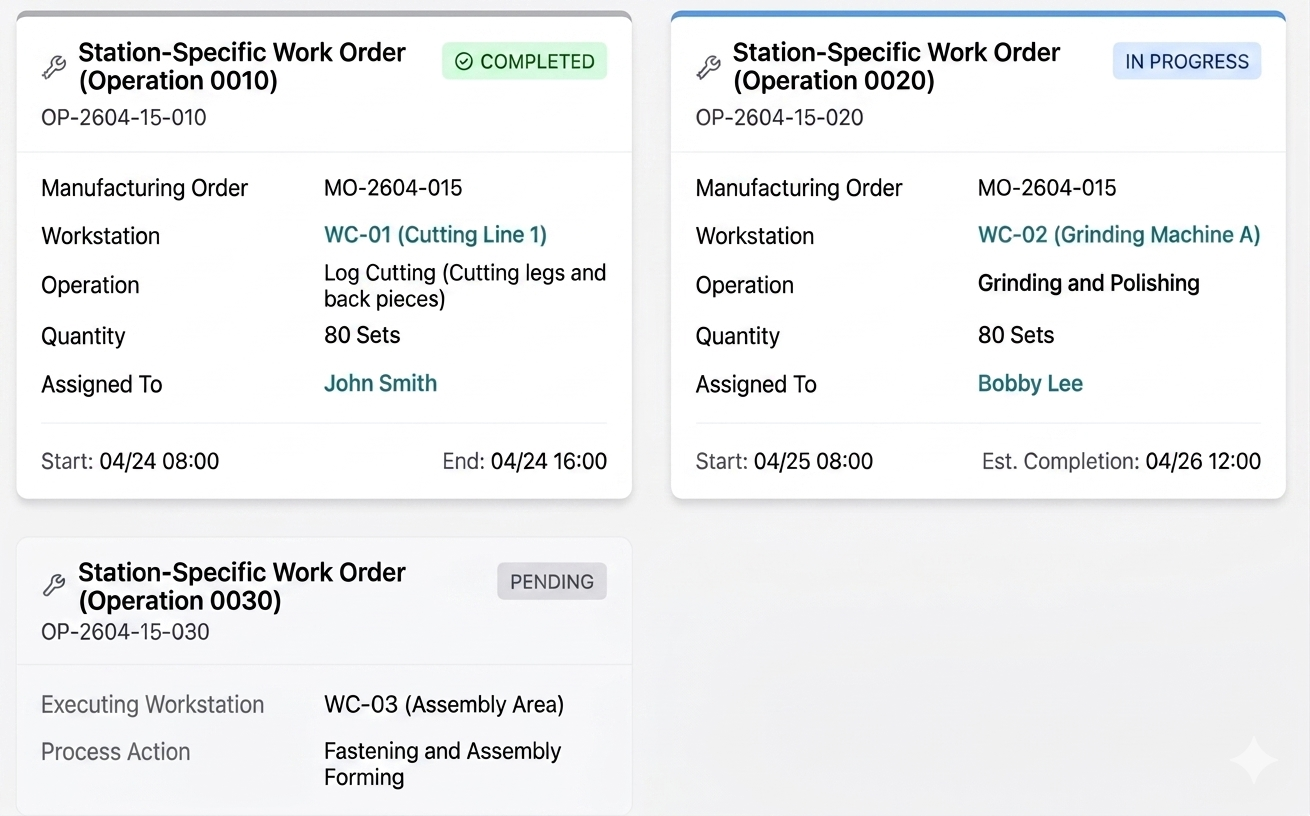
Aside from the work order number itself, one of the most critical element in work order management is its "status." A work order moves from “created” to “materials issued (production started),” and then to “completed and stocked.” Each status change represents the locking-in or release of resources.
If you notice that a large number of work orders remain stuck in the “materials issued” stage without being closed for a long time, this usually indicates a problem on the production floor. This could mean material shortages, machine breakdowns, or operators failing to report completion. By tracking work order status and labor time, we're able to know the actual situation of the factory floor from the office.